


DESCRIPCIÓN
The Monastery of Vazelon (Μονή Βαζελώνος) is or the Monastery of Ioannes Prodromos (Αγίου Ιωάννου Προδρόμου) a ruin located in the Black Sea region of Turkey, which had been regarded as a center of Greek Orthodox life in Maçka area, retaining some control over surrounding villages until its disestablishment. Today, the monastery is accepted one of the most important historical sites of great significance in Trabzon, in this light, the remains of complex has been under the restoration plan since 2020 in order to boost the faith tourism. According to the tradition, the monastery was founded founded in 270 or in 317 which makes it the first Pontic monastery. After the division of the Roman Empire, Vazelon became a part of Byzantine Empire. The monastery was attacked and ruined on numerous occasions by invading forces such as Sassanids in the 6th century. Byzantine emperors financed the monastery as well as allowed Vazelon to expand. After the Sack of Constantinople, Pontus became a part of the Empire of Trebizond, furthermore, Trapezuntine emperors continually funded Vazelon throughout the Middle Ages. The monastery, along with the other Pontic monasteries, was handsomely endowed by the emperors. During the Ottoman Era and into the World War I, Vazelon continued to perform its religious functions. However, the Russian occupation of Trabzon from 1916 to 1917 resulted by the seizure of a respective number of monastic archives to St. Petersburg. In the beginning of 20th century, Vazelon was abandoned by its inhabitants because of first the condition of war and later, due to the exchange of population between Greece and Turkey which took place in 1923. After the exchange of population, Dionysios Amarantidis tranferred the icon of Ioannes Prodromos to the monastery of Agia Triada in Serres, Greece. The monastic complex was seriously damaged by treasure hunters, or pillagers. The Turkish authorities started restorations in 2020 as a part of religious and spiritual tourism. FORMAL ANALYSIS Vazelon Monastery is a multi-story stone structure as it was improved and updated from the time of its building to the time of its abandonment in 1923. The body of the monastery is made from lime mortar, and local stone, possibly granite. Outside walls are thicker than those separating interior rooms. Wood makes up the roof and floors; much of this has disappeared over time. The monastery has four stories, including a variety of rooms. Vazelon Monastery once housed a dining hall, a kitchen, and a cistern for collecting water. The monastery was once accessed by a hanging wooden ladder, which was brought inside at night to prevent trespassing. This was removed in the 1800s. Vazelon’s wooden stairs were replaced with stone stairs around the same time. The monastery contains two chapels. Atop the monastery lies one church built into a cave. At one point, this church housed a bell tower. The other chapel stands about 30 m (98 ft) north of the main monastic complex. Chrysanthos who was the metropolitan bishop of Trebizond during the early 1900s, identified the chapel. He read existing texts on Vazelon Monastery and decided that the chapel had been dedicated to Elias, therefore, the building, named «St. Elias» in medieval sources, may date to 1219. Many of the historic frescoes in Vazelon Monastery remain to this day. One ceiling displays the image of baby Jesus in a cradle. Other frescoes depict the Last Judgement, Heaven, and Hell. The separate chapel dedicated to Elias also holds many paintings of Christian religious figures. The monastery has fallen into disrepair after years of abandonment, treasure hunting, and vandalism. Many historic frescoes have been picked away, and a bell tower that once stood atop the monastery has disappeared. FERMUDE GÜLSEVINC
Información del patrimonio
| Monument or place to visit | The Monastery of Vazelon (Μονή Βαζελώνος) |
| Style | Remains of Late Antique fourth century local masonry structures, later medieval as well as modern addictions. |
| Type | Enclosured monastic complex. |
| Epoch | 4th century – present. |
| State of conservation | Bad condition (Under restoration plans). |
| Degree of legal protection | |
| Mailing address | Village of Kiremitler, Maçka/Trabzon |
| Coordinates GPS | 40.76°N 39.53°E |
| Property, dependency | |
| Possibility of visits by the general public or only specialists | Accessible to public visitors. |
| Conservation needs | Conservation need. |
| Visiting hours and conditions | Reaching to the monastery may be problematic due to the environmental obscurities. |
| Ticket amount | Free. |
| Research work in progress | There is no current restoration going on the site. |
| Accessibility | To reach the entrance of the complex visitors will have to take a vehicle for transportation from Maçka to the village of Kiremitler,or registering for the tours for approximately 37 kilometers: cars are rarely admitted to themonastery entrance and this part of the route is not accessible by either cars or large tourist bus. The visitor has to walk for approximately 6-8 minutes. |
| Signaling if it is registered on the route | Not yet registered. |
| Bibliography | William Miller, Trebizond: The last Greek Empire of the Byzantine Era: 1204-1461, Chicago: Argonaut, 1969. Antonio Sagona, The Heritage of Eastern Turkey from Earliest Settlements to Islam, Macmillan, 2016 Anthony M. Bryer, The Byzantine Monuments and Topography of the Pontos, ACLS Humanities, 2009. |
| Videos | |
| Information websites | wikipedia.org pontosworld.com |
| Location | Mountain Zaboulon, the Village of Kiremitler, Macka/Trabzon. |
INFORMACIÓN DE LA LOCALIDAD
| Other monuments and places to visit | The Bridge of Maçka, the Monastery of Soumela and the Monastery o Peristera (Kustul). |
| Natural Heritage | |
| Historical Recreations | |
| Festivals of Tourist Interest | |
| Fairs | |
| Tourist Office | |
| Specialized Guides | |
| Guided visits | |
| Accommodations | No hostel near to the monastery. Hotel or bed and breakfast in the village of Kiremitler (6-8 min by walking), Maçka (30 min by car) or Trabzon (37 minutes by car). |
| Restaurants | Meseici Aile Oteli ve Restaurant (Bakımli, Köybasi Sokak, 61750 Maçka/Trabzon), Cizbiz Et Mangal ( Gürgenagaç, Yukarı Küme Evleri No 2, 61750 Maçka/Trabzon). |
| Craft | |
| Bibliography | William Miller, Trebizond: The last Greek Empire of the Byzantine Era: 1204-1461, Chicago: Argonaut, 1969. Antonio Sagona, The Heritage of Eastern Turkey from Earliest Settlements to Islam, Macmillan, 2016 Anthony M. Bryer, The Byzantine Monuments and Topography of the Pontos, ACLS Humanities, 2009. |
| Videos | |
| Website |
Patrimonio Natural
GALERÍA FOTOGRAFICA
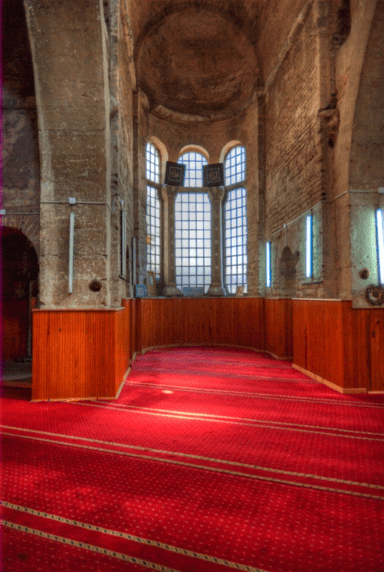
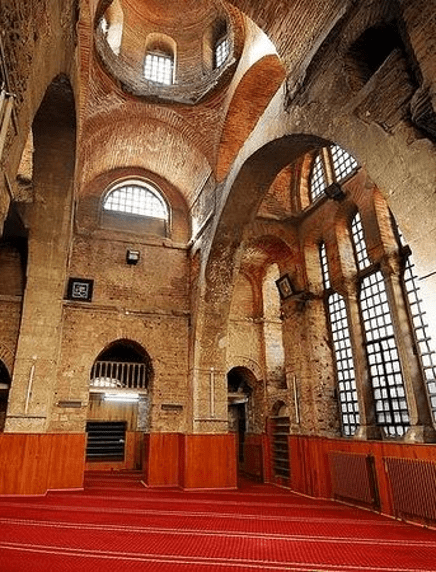
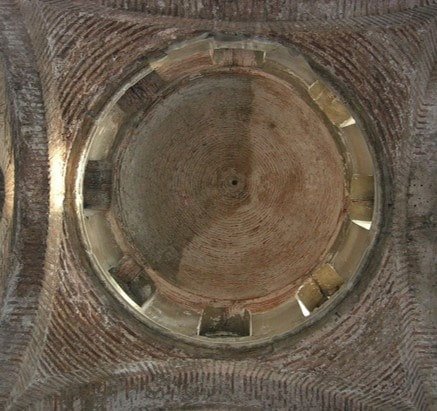
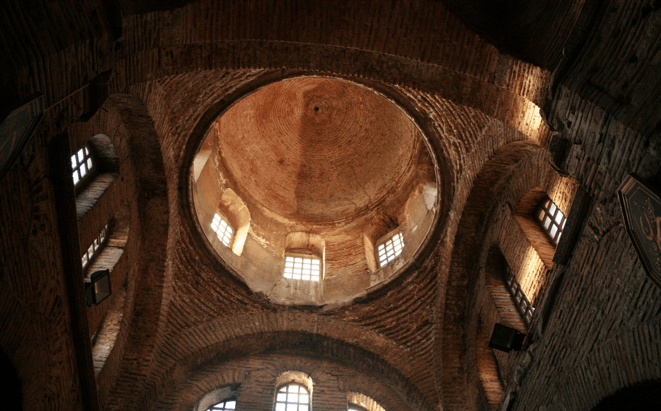
EN LOS ITINERARIOS
¿QUIERES SUGERIR UN ITINERARIO?
PATRIMONIO
Sigue descubriendo nuestro Patrimonio común.
BeakheadIntrados, CC BY-SA 4.0 <https://creativecommons.org/licenses/by-sa/4.0>, via Wikimedia Commons